
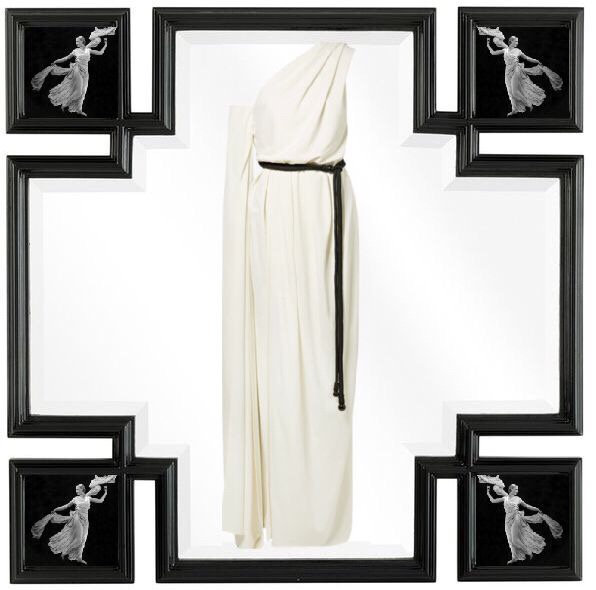
In 1931, the vintage photographer George Hoyningen-Huene pays a tribute to the dancer Isodora Duncan and is inspired by Ancient Greece. The model wears a Madeleine Vionnet’s crepe pajamas.

The American dancer Isodora Duncan (1877-1917) is considered as the mother of Modern dance. She revolutioned the dance with the ideas of freedom and the esthetics and ideals of Ancient Greece.

Terpsichore is the Muse of dance and Greek Chorus. The name “Terpsichore” means “delight of dance”. Terpsichore is called “the Whirler of the Dance”. She is considered as the mother of Sirens. The lyre and the cymbale are her emblems. Jean-Marc Nattier painted Terpsichore in 1739.

It is one of the nine Muses : daughters of Zeus (King of the Gods) and Mnemosyne (Goddess of memory). These muses were Clio (muse of history), Thalia (muse of comedy), Erato (muse of nuptial song), Euterpe (muse of music), Polyhymnia (muse of rhetoric), Calliope (muse of epic poetry), Terpsichore (muse of dance), Urania (muse of astrology and astronomy) and Melpomene (muse of tragedy). Pierre Mignard (1612-1695) painted « Calliope, Uranie and Terpsichore ».


Leave a Reply