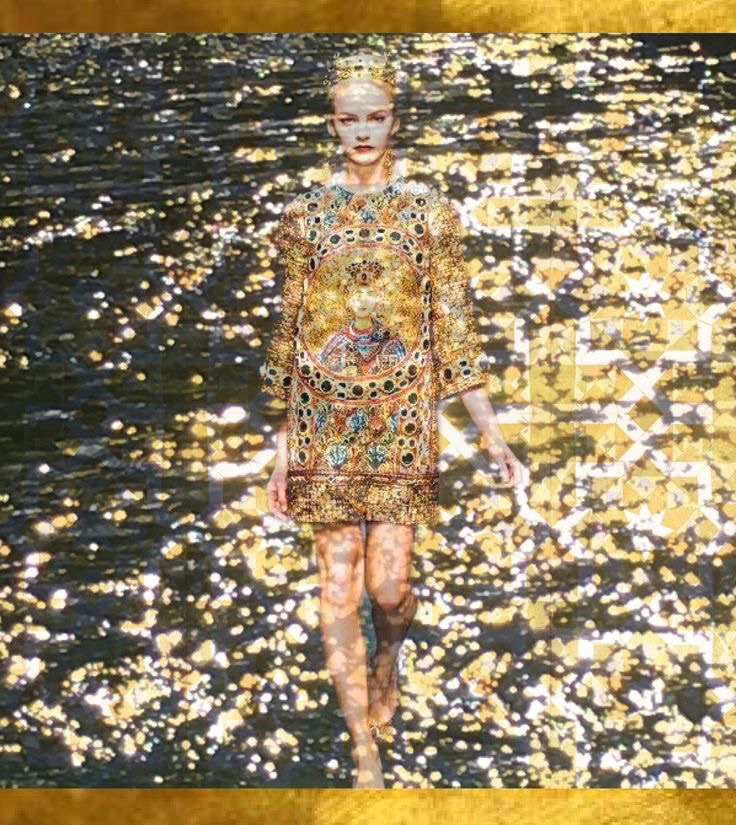

At the time of the Norman era in Sicily (Dolce & Gabbana exhibition “From the Heart to the Hands” in Paris, March 2025)
Dolce & Gabbana paid tribute to Sicily through these clothes and decorations (mosaics). The designers were inspired by the Cathedral of Monreale in Sicily. The cathedral of Monreale is emblematic of Norman architecture, blending Norman, Islamic, Byzantine, and classical elements. It was commissioned by William II. The cathedral was completed in 1182. In Sicily, the…


Monreale architecture
Dolce Gabbana byzantine dress and mosaics from the Cathedral of Monreale in Sicily.
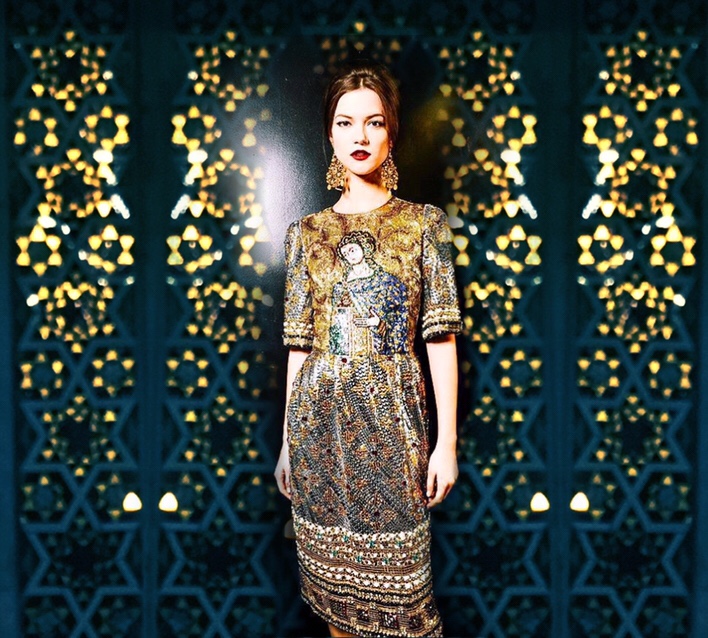

Une nuit à la lumière de l’Or de Byzance
Dolce Gabbana model wearing a Byzantine inspired dress and geometric mosaics from the Cathedral of Monreale, Sicily (11th century). This monument is an example of the Arab-Norman architecture : a confluence of the Byzantine and Arabian art and culture in Sicily, when the Normans dominated Sicily (11-12th centuries).
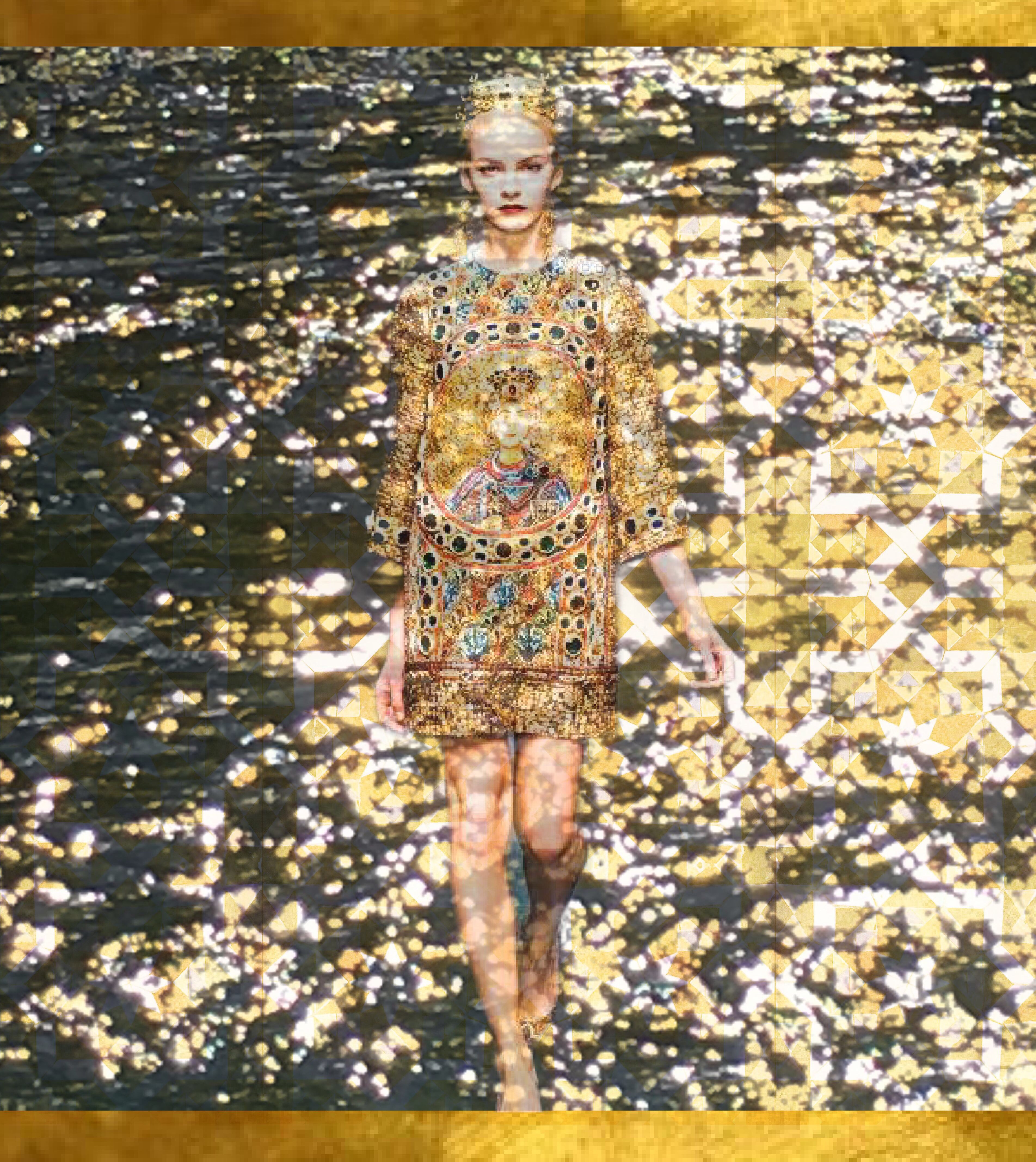

Lumière d’or
Photo of water under the sun, Dolce Gabbana Byzantine dress, gold texture and geometric mosaics from the Cathedral of Monreale, Sicily. This monument is an example of the Arab-Norman architecture : a confluence of the Byzantine and Arabian art and culture.


Une femme Byzantine parée de ses plus beaux atours
Byzantine mosaics and stain glass in the Palatine Chapel of the Norman palace (12th century) in Palermo, Sicily. Illustration by Tadarino of a woman wearing a Byzantine costume. The palatine Chapel is in the Norman palace in Palermo, Sicily. The construction of the Palatine Chapel began in 1132. The edification of the chapel was ordered…


Byzantine Empire magnificence
Dolce Gabbana dress and a mosaic representing the Byzantine Empress Saint Irene of Hungary, born Piroska (1088-1134). This mosaic is located in The Hagia Sophia in Constantinople (now Istanbul) circa 1118. Source : flickr