

Emerald jewelry
Emerald is a precious stone belonging to the beryl group of minerals. Emeralds are green with different shades (medium green, darker green, blue-green or yellowish-green). “Emerald” comes from the old French word “esmeralde” deriving from the Greek word “smaragdos” meaning “green stone”. This gemstone is found mostly in Colombia but also in South America, Africa,…


Amethyst jewelry
Amethyst belongs to the macrocrystalline branch of the quartz group of minerals. The amethyst’s colour varries from purple and violet to pale red-violet. Its colour comes from the iron and aluminium impurities. Furthermore, this fine gemstone is found mainly in Brazil but also “in Bolivia, Canada, India, Madagascar, Mexico, Myanmar (Burma), Namibia, Russia, Sri Lanka, United…
Pink tourmaline
Tourmaline is an important group of complex gem-quality boron silicate minerals. This fine stone can be found in a multitude of colours : “from black to bluish-black, dark brown, yellow, medium brown, blue to neon blue, lime to dark forest green, red and reddish purple, yellow, pink, and colorless”. Most of the tourmalines are natural,…


Bakelite jewelry
Bakelite is a castable, fire resistant plastic invented by Leo Baekeland in 1909 for industrial purposes. However, jewelry makers used it to create jewels ; it was very popular in the 1930’s and 1940’s. The jewelry designer Mark Davis uses bakelite for his designs : Source : http://jewelry.about.com/od/bakelitejewelry/a/care_id.htm

Lapis Lazuli jewelry
Lazurite is a feldspathoid silicate and belongs to sodalite group of minerals. It is a blue stone which can vary from “greenish blue to violetish, from medium to dark and from low to highly saturated”. This fine stone is found mainly in Afghanistan but is also found in Angola, Argentina, Canada, Chile (North of Santiago),…

The Cannes Film Festival in photos
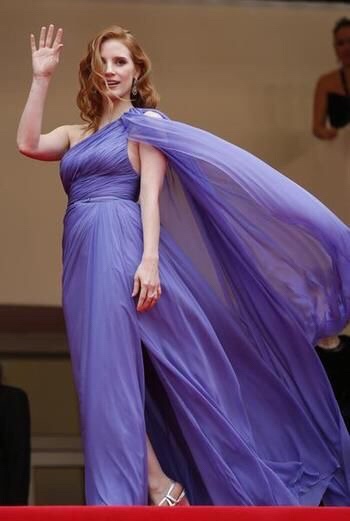
Glamour, sparkles and off course cinephilia are there at the Cannes Film Festival. Anna Kendrick : Audrey Tautou : Diane Kruger : Emma Stone : Elle Fanning (member of the Cannes jury in 2019) : Rachel McAdams : Leonardo DiCaprio (“Gangs of New York” in 2002, “The great Gatsby” in 2013 and “Once upon a…

Blue topaz jewelry
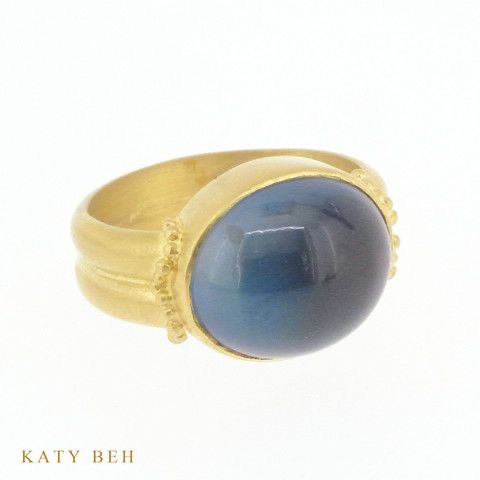
Topaz is an aluminium silicate containing fluorine and hydroxyl. Purely, it is colourless (white) ; it is the impurities which cause the variations of colour. “Topaz ranges from colourless to yellow, orange, red-brown, light to dark-blue, pink to red, violet and light-green.” Furthermore, Topaz is distinguished by its hardness and its perfect cleavage. This fine…